
Salahaddin Abrar
—
It was May 2025 when I held my newborn baby in my arms, and I knew right away that he would be the most precious treasure I would ever hold in this world.
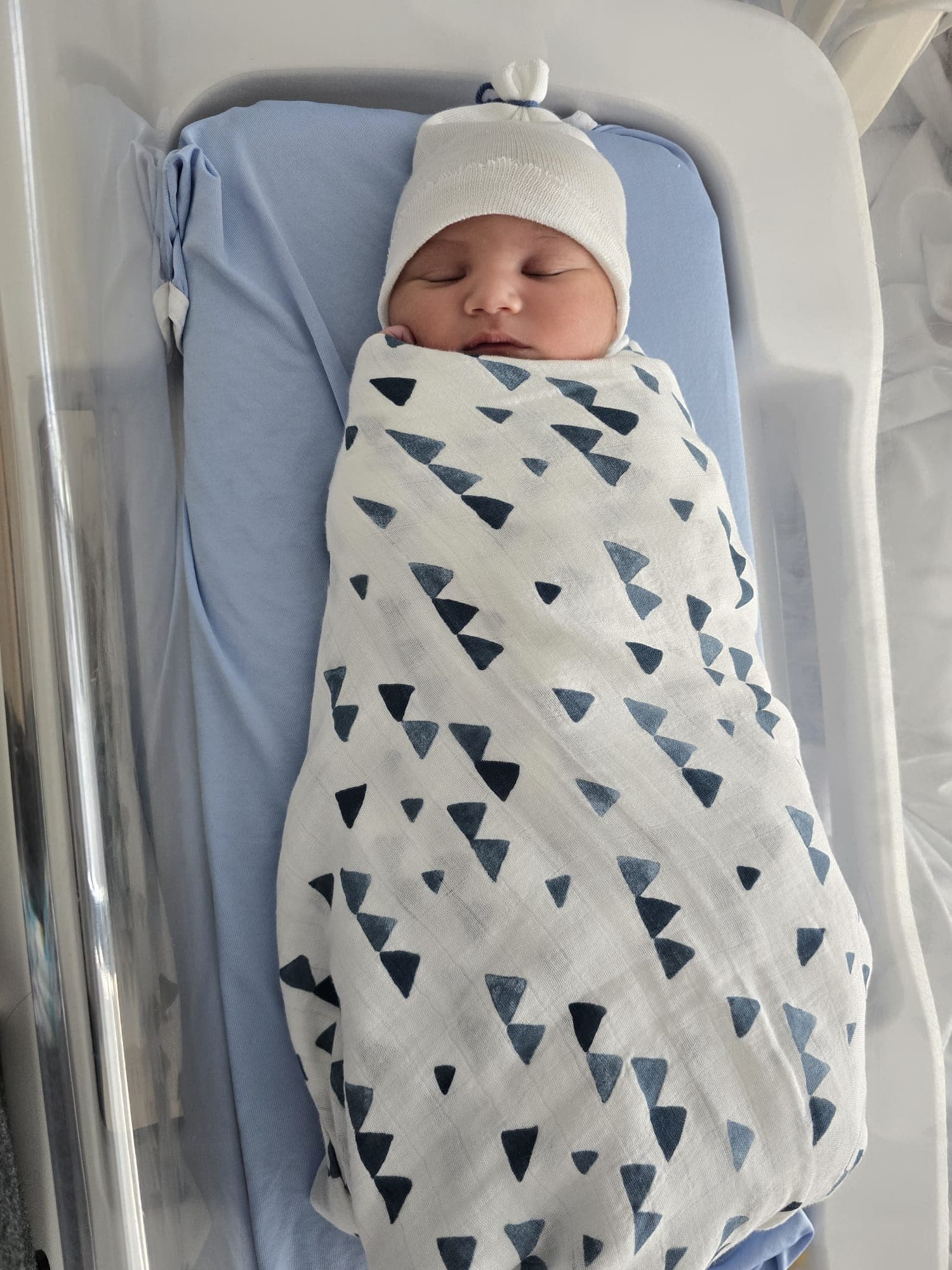
By God’s grace, he was a perfectly healthy baby, our first child and my parents’ first grandchild.
We named him Salahaddin, which means ‘the goodness of faith’.
He grew up in a flash, from having to support his neck when we held him, to holding him up unsupported, to watching him wiggle on his tummy, learn to crawl, sit, and finally stand up on his own two feet.
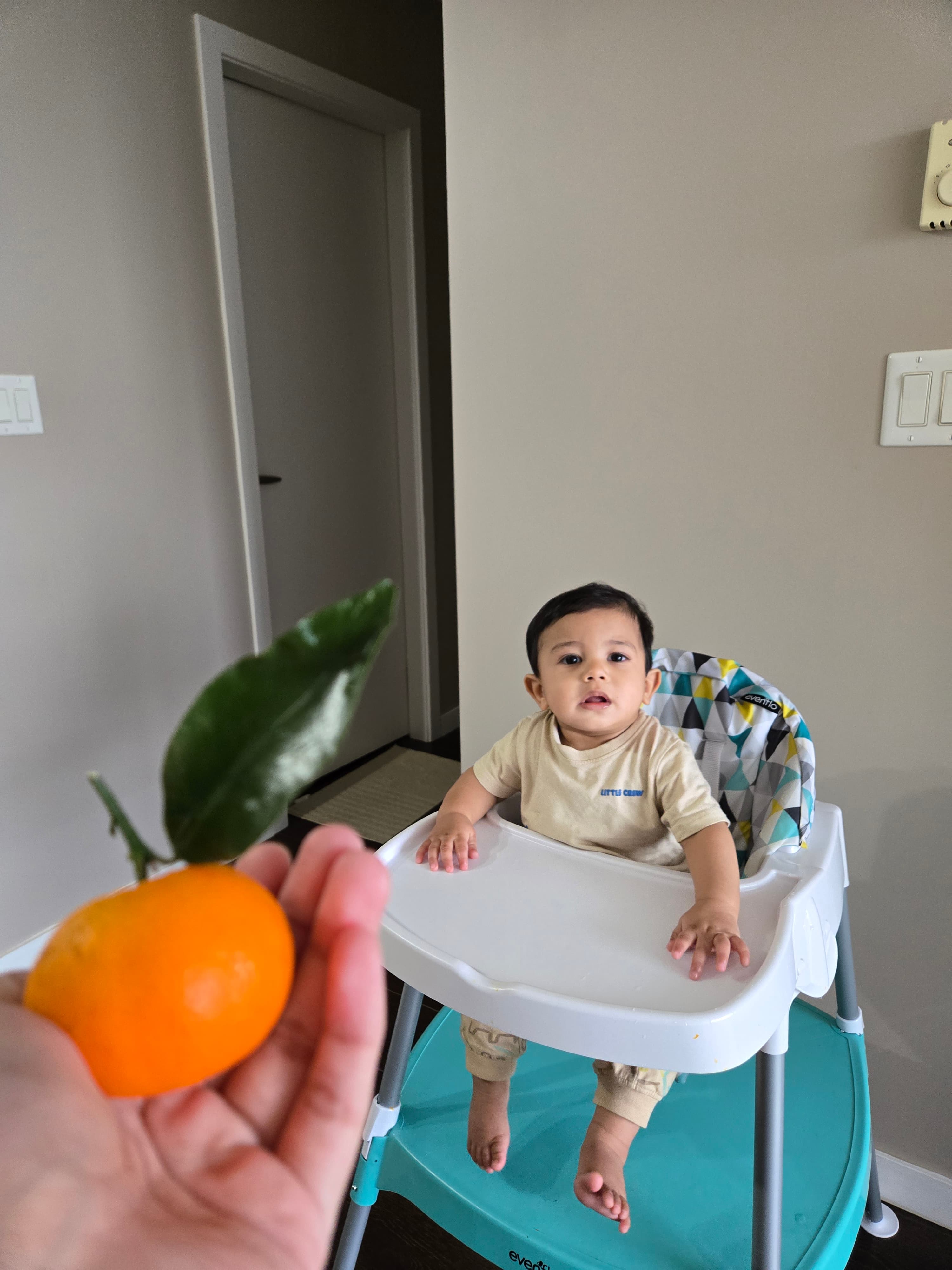
He loved oranges: loved to eat them when hungry, loved to squish them when bored, loved to throw them around when angry. He was also the only human I’ve ever known to love eating limes.
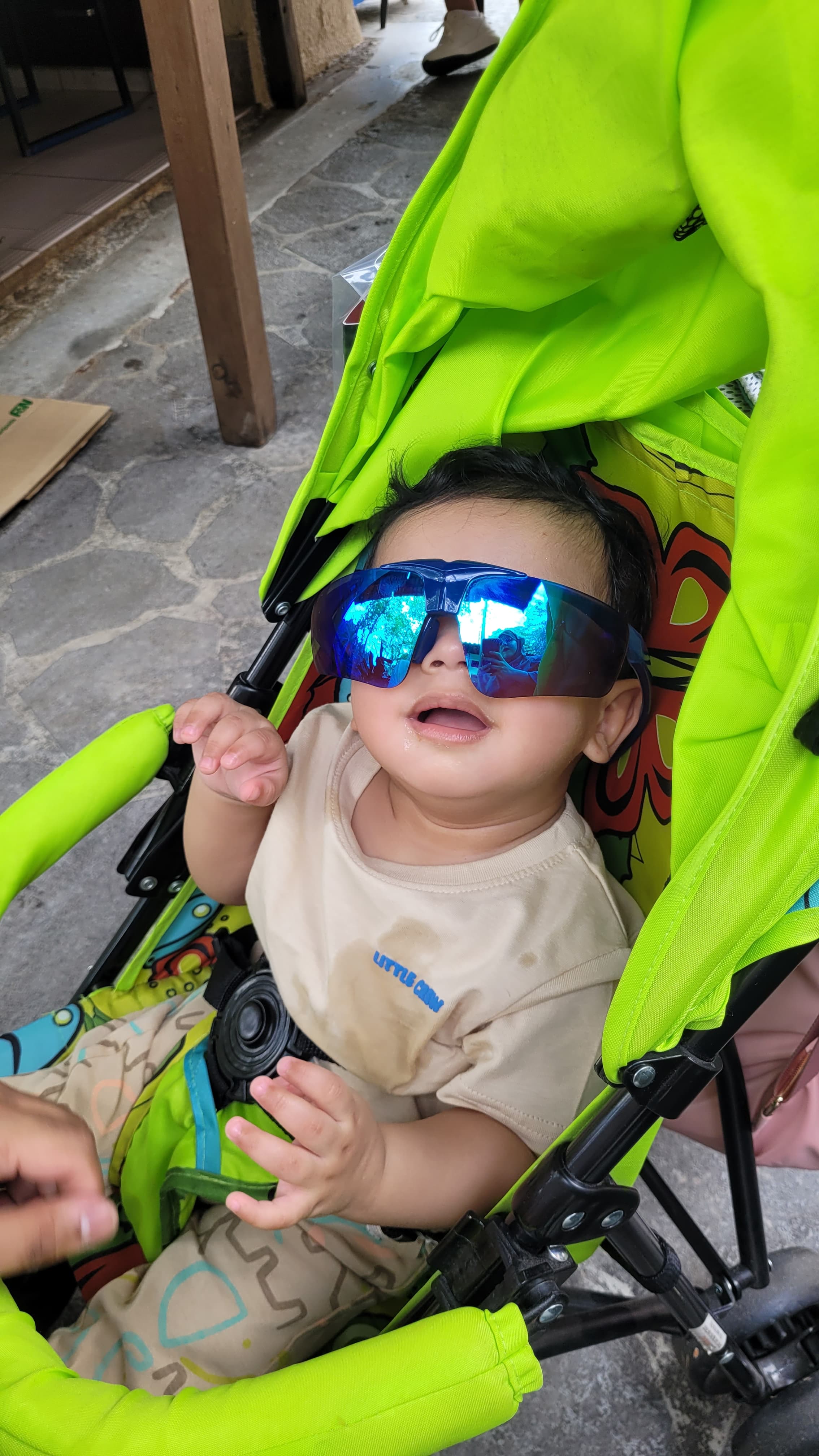
He loved to be outdoors, cruising in his ride as we pushed him along, whether on a hike, exploring town, or wandering a quiet mall. He never made a fuss when we were out and about; he loved watching the world and its people as they went about their business.
We were granted some of his firsts: giving him his first feed, first diaper change, first shower, first lullaby… but we will never see him take his first steps, never hear him call us babba and mumma, never teach him to ride a bike, to swim, to play sports, to make friends. We won’t see him grow up to be a man who would be a source of goodness in this world, a man we would be proud of.
In his brief 11 months of life, he was loved abundantly by his parents and his extended family, always the centre of attention and affection wherever he went.

He was in my arms as he took his first breath. He was in my arms as he took his last. Had the healthcare system not failed in his care, he would still be in my arms, never outgrowing them.
We will miss him. I will miss him.
Forever.

Fly, my son, in the heavens above, unhindered. There are no breathing tubes to slow you down, no disease to hold you back.
Fly until we meet again, InshaAllah (God willing), and we will hold you in our arms again, this time never to let you go.
The healthcare system failed Salahaddin
Salahaddin passed away in our arms around 7 am on April 19 from acute liver failure. Our boy, our world, could have been with us today, had the system not failed in his care.
Salahaddin was an 11-month-old infant. He could not speak, could not describe his symptoms, and could not advocate for himself. His safety depended entirely on the medical professionals responsible for his care recognising how gravely ill he was, and acting on it. That duty was owed to him.
He was failed not once, but at almost every point where someone could have recognised how sick he was and acted on it. The specific failures in his care are set out below.
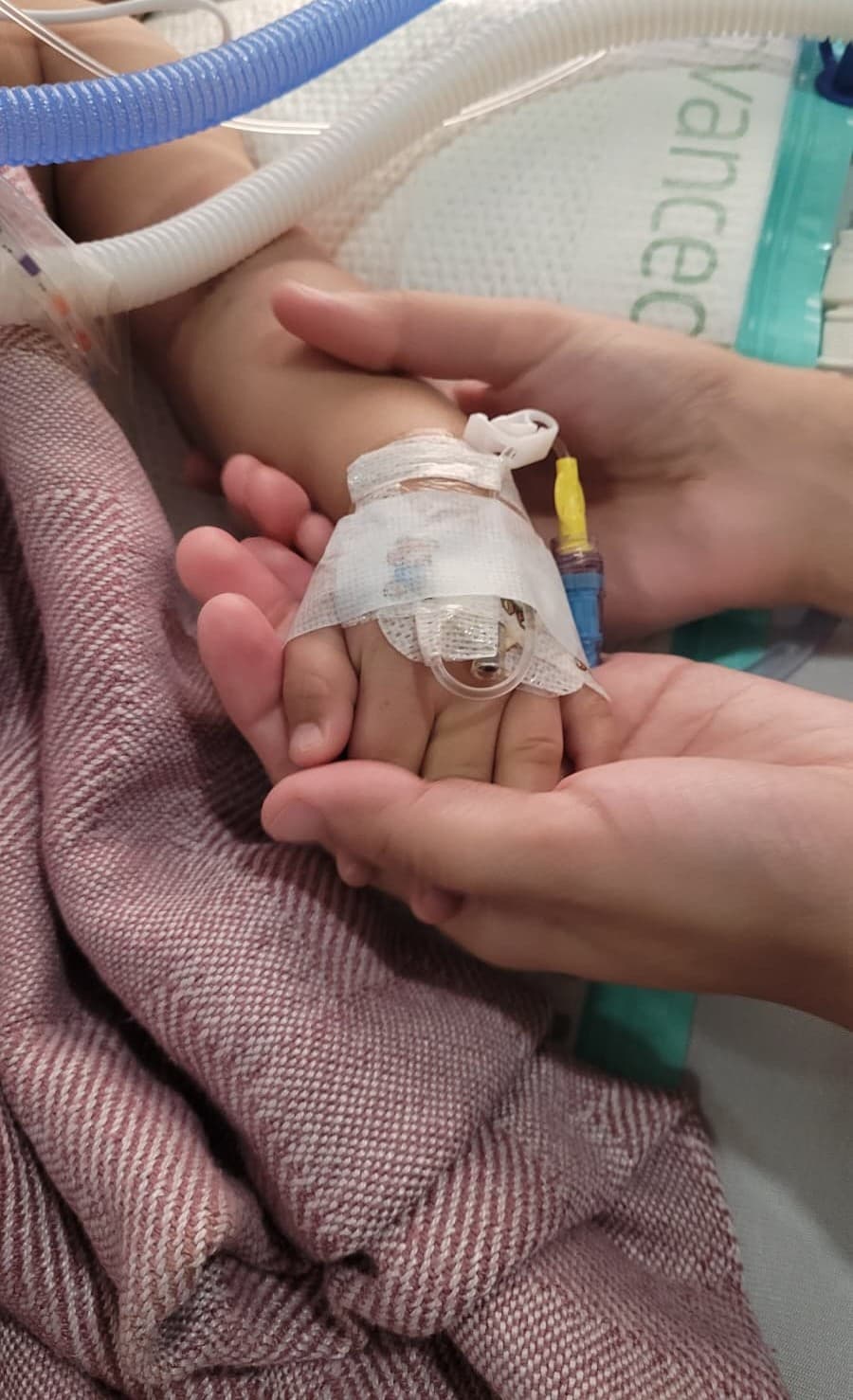
The day that upended our lives
Before hospital · April 15–16
Salahaddin fell ill and had a few episodes of vomiting, and two episodes of white/chalky stools. We monitored him closely at home, giving him the electrolytes and nutrition he needed.
April 17
Brought to Surrey Memorial ER after repeated vomiting and lethargy. Told nothing was seriously wrong; given anti-nausea medication and oral electrolytes.
Discharged as “vomiting.” No bloodwork, no diagnostic workup, no glucose or blood pressure check. Our concerns were not taken seriously.
Found unresponsive at home; rushed back to the ER. Blood glucose critically low.
Emergency fluids and glucose via an intraosseous line (into the bone of his leg). Blood glucose stabilised.
Still unresponsive. Doctors still suspected nothing serious; said he would wake up.
Unresponsive, declining with each hour. No further tests or diagnostic work up; repeatedly told he would just wake up soon. He just lay in an ER bed for close to 10 hours without testing or treatment.
Only after we pushed hard, with the nurse’s help, did the physicians return to re-assess him.
We were told he was seriously ill and needed transfer to BC Children’s Hospital for critical care. He was intubated and transferred to critical care at BC Children’s Hospital.
April 18
BC Children’s Hospital told us his liver had failed; his only hope was a transplant.
Transferred to Stollery Children’s Hospital, Edmonton, for transplant assessment.
Critical care team tried to stabilise him; his condition kept deteriorating.
April 19
Salahaddin passed away in our arms.
Where the system failed
Discharged without any testing
At the first visit, despite his two-day history of illness, Salahaddin was discharged from the ER:
- Without a single blood test, any diagnostic workup, or even a check of his blood glucose or blood pressure.
- Ignoring red flags that required immediate diagnostic workup.
- Sent home with a diagnosis of “vomiting” and some oral electrolytes.
Within hours he was unresponsive. Only when we rushed him back was his blood glucose checked, and it was found to be at a critically low level.
No diagnosis, no additional testing
At the second ER visit, only one set of bloodwork was done. After that, Salahaddin lay in an ER bed for close to ten hours with no repeat bloodwork and no further diagnostics, even as his condition kept declining and bloodwork results already on record clearly pointed to something serious.
Our concerns were not taken seriously
Despite us repeatedly raising our concerns, the doctors simply kept telling us that he will wake up soon and there is no cause for worry. However, his existing blood test results, which we were unaware of at that point, clearly showed that his condition was much more serious, requiring intensive care.
The team only returned to seriously re-assess him after we pushed hard, with the help of the nurse assigned to his care. Ten hours after he was admitted in an unconscious state.
By the time his deterioration was finally acted on and he was transferred for intensive care, he was already critically ill, and had developed acute liver failure.
What we are asking for
Accountability for Salahaddin
We contacted Fraser Health to lodge a complaint about the lapses in the medical care of our son.
We are asking for
An independent investigation into, and accountability for, the serious lapses that happened in the care of our son and the repeated failings at Surrey Memorial Hospital.
Real changes to their internal processes and guidelines, so that no other child or adult suffers due to poor quality of medical care like our son did.
Healthcare reform in BC
We are calling for
The right to an urgent, independent medical review at the bedside
Any patient, parent, or caregiver should have the right to call for an urgent review by a senior medical team from outside the team currently in charge. That team assesses the patient with fresh eyes and can act on its own judgment: ordering tests, changing the treatment, or moving the patient to a higher level of care such as the ICU.
Why it matters. When the treating team has missed something or stopped listening, this breaks the deadlock. It puts independent senior eyes, with the power to act, at the bedside, instead of leaving a family to keep pleading with the people who are not listening. Families are often the first to see a patient slipping, long before the system reacts, and it protects everyone who cannot speak for themselves: children, seniors, and the critically ill.
This already exists in other countries, and it saves lives.
England (Martha’s Rule): in every acute care hospital, a patient or their family can trigger an escalation for an independent review of the care being given.
In the first 18 months:
- 4,047cases of acute decline were caught
- 2,310patients’ care plans were changed
- 524potentially life-saving transfers to higher-level care
Australia: a patient-and-family escalation pathway is required by law nationwide; Queensland’s “Ryan’s Rule” alone has been used nearly 14,000 times since 2013.
New Zealand: its national “Kōrero mai” (“talk to me”) program lets patients and their family escalate their concerns for an urgent response when they feel a patient is getting worse.
United States: in many hospitals, “Condition Help” lets a patient or family call an independent response team to the bedside when they fear a patient’s condition is worsening.
It is spreading. Wales has adopted it, Scotland is piloting it, and Ireland is considering it.
Canada is behind, and BC can lead
There is no province-wide or national equivalent anywhere in Canada. British Columbia has the opportunity to become the first province to make it a right for everyone.
We could not get anyone to listen for our son in time, but we are determined not to let it happen to any other family. Stand with us as we call on the BC government to make this a right, so that every patient and family is heard while it still matters.
Immediate establishment of an independent body to carry out investigations and oversight when a patient suffers serious or preventable harm
The health authority cannot be allowed to keep “investigating itself” lapse after lapse.
Publish complaint data
The provincial government has the data on patient-care complaints across BC. We ask that this data be made public: how many are filed each month, how long they take to resolve, how many are resolved, and how many are escalated, broken down by health authority.
By publishing this data, the government can increase transparency, help the public understand whether reforms are working, and allow every health authority to be measured against the rest.
Updates — our push for answers
We are currently pursuing this through a formal complaint to Fraser Health’s Patient Care Quality Office. Given the current responses and delays from the PCQO office, we are losing trust in the process and the people in charge of investigating this, but we will not stop until we have satisfactory answers. We will post updates here as the process moves forward.
Day 0 since the complaint was filed
Formal complaint filed with Fraser Health’s Patient Care Quality Office.
Day 2 since the complaint was filed
Fraser Health responded saying that they are “not able to provide a written response” to our questions, and instead suggested a meeting with “leadership” from Surrey Memorial Hospital.
Day 3 since the complaint was filed
First follow-up from our side, to understand why they cannot provide written answers to our questions.
Day 20 since the complaint was filed
Second follow-up. 20 days later, no response from the PCQO.
Day 32 since the complaint was filed
Third follow-up. One month later, no response from the PCQO.
Day 34 since the complaint was filed
Received a response from the PCQO. Their response states they will provide written answers to our questions, although they may not be able to answer all of them.
Day 88 since the complaint was filed
No response to our complaint. It is now well past Fraser Health’s own 40-day deadline to respond to patient complaints.